
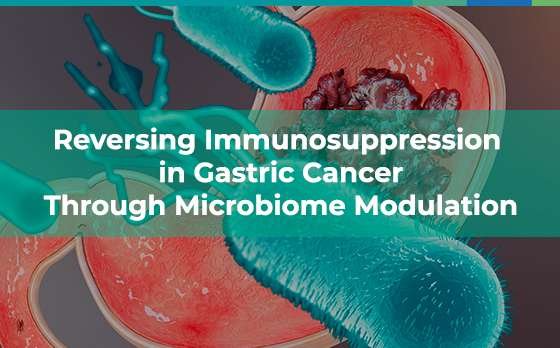
Early detection and surgical intervention are crucial for improving outcomes in gastric cancer. Unfortunately, advanced stage IV and recurrent cases have a poor prognosis, which highlights the need for new treatment approaches. Recent research has focused on the intestinal microbiome of gastric cancer patients to explore new avenues for treatment by reversing the immunosuppressive environment typically found in these patients.
In gastric cancer, immune cells often exhibit high levels of programmed death-ligand 1 (PD-L1) and interleukin-10 (IL-10), both of which are known to suppress the immune response. Elevated levels of these immunosuppressive factors have been found in both immune cells and tumor cells of gastric cancer patients, contributing to a more aggressive disease course.
Researchers compared the intestinal microbiome of gastric cancer patients with that of healthy individuals and found that beneficial bacteria such as Faecalibacterium and Bifidobacterium were less abundant in cancer patients. This imbalance in the gut microbiome may be linked to the heightened immunosuppression observed in these patients.
Butyrate, a key metabolite produced by gut bacteria, has shown promise in reversing immunosuppression. The study demonstrated that butyrate could reduce the expression levels of PD-L1 and IL-10 in immune cells. In an experimental model, peripheral blood mononuclear cells (PBMCs) from advanced gastric cancer patients were introduced into NSG mice, which were then injected with AGS cells to simulate cancer. The mice treated with butyrate exhibited inhibited tumor growth, suggesting that restoring a healthy microbiome and its metabolic activities could counteract the immunosuppressive state in gastric cancer.
This research underscores the potential of targeting the gut microbiome to enhance the immune response against gastric cancer. By restoring the balance of beneficial bacteria and utilizing metabolites like butyrate, it may be possible to not only inhibit tumor growth but also reverse the immunosuppression seen in cancer patients. These findings open new avenues for developing microbiome-based therapies, offering hope for better treatment outcomes in gastric cancer.
Reference: Lee, S. Y., Jhun, J., Woo, J. S., Lee, K. H., Hwang, S.-H., Moon, J., Park, G., Choi, S. S., Kim, S. J., Jung, Y. J., Song, K. Y., & Cho, M.-L. (10 Jan 2024). Gut microbiome-derived butyrate inhibits the immunosuppressive factors PD-L1 and IL-10 in tumor-associated macrophages in gastric cancer. https://doi.org/10.1080/19490976.2023.2300846